Harwell: Village for a thousand years

  • Harwell Book
    • Introduction
      • Contents
    • Beginnings
      • The Beginnings of Harwell
      • The Charters
    • Middle Ages
      • Harwell Church
      • The Medieval Manors
      • Cruck Buildings
    • Tudors
      • The Tudor period
      • Berkshire Farmers and their Homes
      • The Harwell Mug
      • Harwell: The Family Name
      • Trade Tokens
      • In the Civil War
    • Charities
      • John Loder
      • Christopher Elderfield
      • Poor’s Orchard
      • William Wells
      • J. King
      • Frances Geering
      • Matthew Eaton
      • Robert Loder
      • Bag(g)’s Tree
      • An Old Harwell Recipe
    • 19th C
      • Enclosures
      • The Great Fire of Harwell
      • Fire at Didcot Station
      • Harwell and the Early Posts
    • People
      • The Manor of Bishop’s Harwell, or Lower Manor, after the Middle Ages.
      • Bob Lay, Bob Lay, Bob Lay
      • The Bosley Family
      • John Lay of Prince’s Manor 1815 – 1888
      • From a book sold for the Blewbury Village Organ Fund in 1874.
      • Thomas James Pryor
      • The Day Family
      • The Hitchman Family
      • Other Old Harwell Families
      • Pillar House, Harwell
      • A Country Doctor (Dr Richard Rice)
      • Kelly’s Directory reports on the Harwell of 1891
      • The School
      • A Pictorial Miscellany
    • 20th C
      • Stanley Day
        • The Turn of the Century
        • A Visit to Harwell
      • Tape Recordings
        • A Houseboy at Harwell
        • Eliza Hutchings
        • Harwell Bakeries
        • The Eggs
        • Old Neighbours
        • Fire at King’s Farm (c.1908)
        • Will It Light?
        • Miss Irene Clarke’s memories.
      • Poem by H.S. Baker
    • WWII
      • Guinea Pig Club
      • Eric Greenwood
      • Harwell in Wartime
      • School Life in Wartime
      • The Harwell Players
    • 1945 -1985
      • The Atomic Energy Research Establishment.
      • Harwell Parish Council
      • Water and Sewage
      • Nursing Service
      • School Life after the War
      • The Winterbrook Youth Club
      • The Public Houses
      • The Whit Monday Feast
      • Wild Flowers of Harwell
      • The Bee Orchid
      • Village Footpaths
      • St Matthew’s Church Today
      • Harwell Women’s Institute
      • Harwell Bowls Club
      • Harwell Football Club
    • Cherries
      • Robert Loder
      • Cherries (1965)
      • Gordon Bosley
      • John Masefield: The Cherries
    • Appendices
      • Appendix I the Harwell Charters
        • Introduction to The Harwell Charters
        • Charter No 1
        • Charter No 2
        • Charter No 3
        • Appendix I Charter References
      • Appendix II Buildings
      • Appendix III Glossary
      • Appendix IV Contributors
      • Appendix V References
« J. King
Matthew Eaton »
You are here: Home / Charities / Frances Geering

Frances Geering

In 1715 Frances Geering (née Jennings), before her marriage to William Geering, assigned in trust a sum of money with some goods and chattels for ultimate disposal either by direction during her lifetime, or by her will.

In her will, dated 1723, she bequeathed the sum to her brother, John Jennings, and Walter Tyrrell (and two others, deceased); they were directed to purchase, immediately after her death, a house or ground for the building of alms houses for six poor widows to live in. They were to be chosen preferably from those born in the parish, but others as they saw fit, “being the greatest objects of charity”. The almshouses are in the High Street, by the War Memorial, and have since been converted to just 2 dwellings.

The remainder of the money was to be spent in buying land, the rent from which, after repairs and upkeep of the almshouses had been met, should be put to six new cloth gowns and coats for the widows entering the almshouses, and thereafter a new coat and gown every two years. Any remaining moneys were to be shared among them in quarterly payments. The trustees had power to evict any of the women in case of quarrels or unseemly behaviour. In 1734 this was ordered to be done, so presumably Frances Geering died shortly before that.
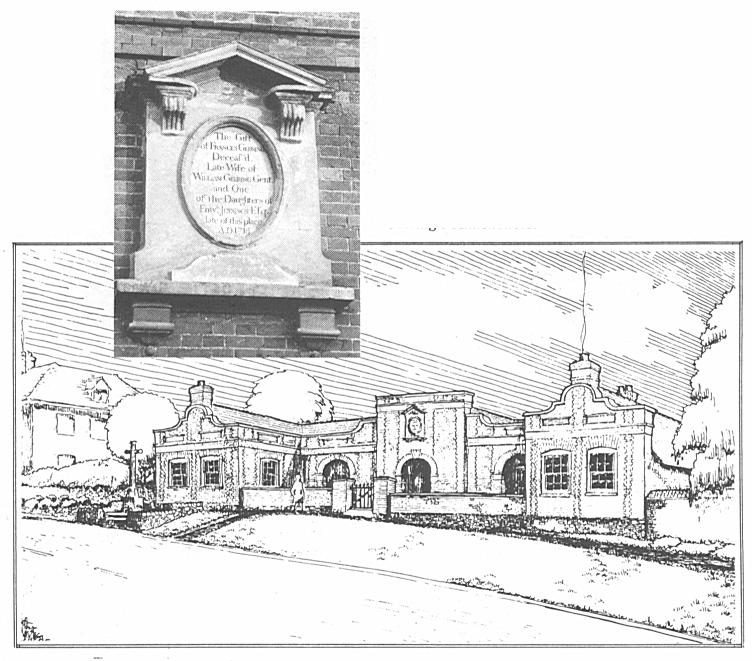
04-01
Figure 4.1 Geering’s Almshouses.

Among lands purchased for this charity, old names of localities appear: Town Mead, the Green, the Frith, the Marsh Lands, an orchard called Farthings, Hillmead Road, Lower East Field, and Upper East Field (bounded by the Holloway). Some of these can be identified; Town Mead was north of the village, beyond Bishop’s Manor, and west of the great East Field which stretched from Icknield Way down the whole of the east side of the village and beyond. The orchard called Farthings, owned previously by Robert Loder and mentioned in his accounts, as we have already seen, is given as adjoining the charity school house.

In the 1893 scheme the income of the almshouse account was all that from the Frances Geering charity, plus half of that from the Matthew Eaton charity, which was established in 1772.

Comments

  • David (Webmaster) –
    12 Jan 2009

    This charity is now THE FRANCES GEERING ALMSHOUSE CHARITY – Charity Number 204399 -. See the Charity Commission’s web site for more information. http://www.charity-commission.gov.uk/

Leave a Reply Cancel reply

Your email address will not be published. Required fields are marked *

This site uses Akismet to reduce spam. Learn how your comment data is processed.

« J. King
Matthew Eaton »

Harwell is a village in south Oxfordshire, England, although until 1974 it was a Berkshire village. Harwell was first mentioned in 985, before the Doomsday Book.
This website presents the full text of the book (ISBN 0 9510668 0 3 ) published in 1985 to celebrate the village millennium.
"Harwell ~ Village for a thousand years"

Additional information about Harwell Village (History Notes, photos and more) can be found at harwellvillage.uk

Website © 2005–2026 maintained and managed by David Marsh on behalf of Harwell Parish Council
Copyright © 1985–2026 in the text of the book is vested in Harwell Parish Council